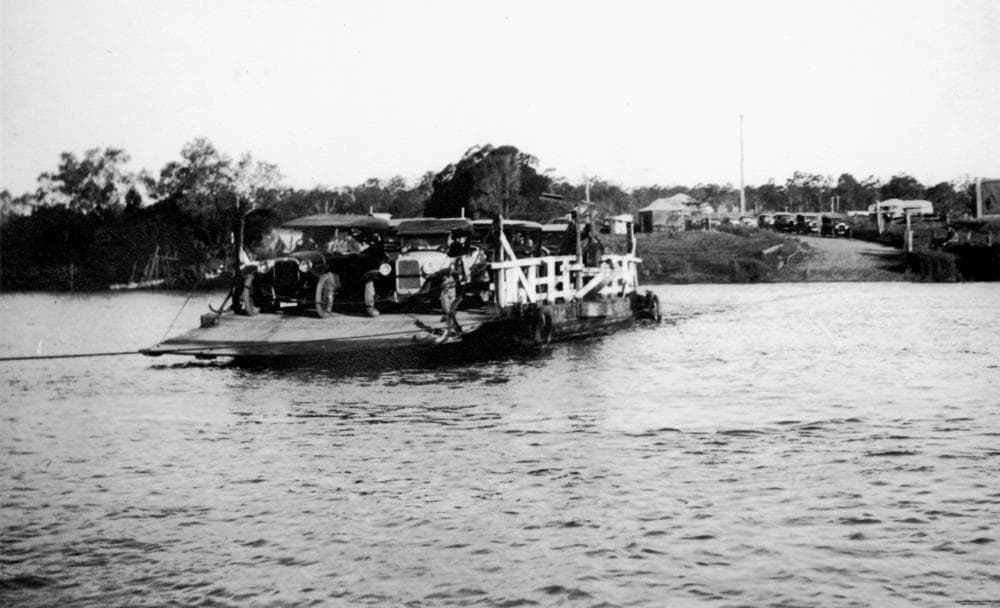
Image: State Library of Queensland / Wikimedia Commons (CC BY 3.0 AU)
Two Hundred Years of Logan, We Should Have a Party
August marks 200 years since a Scottish soldier in a whaleboat named the river that would give an entire city its identity.
Image: State Library of Queensland / Wikimedia Commons (CC BY 3.0 AU)
A Whaleboat and an Unknown River
In August 1826, Captain Patrick Logan set out from the Moreton Bay penal settlement in a whaleboat with a crew of eight. Rowing south through the bay, he found the mouth of a large river no European had charted before.
Logan followed it inland for what he estimated as 120 kilometres, finding it deep enough for a large boat the entire way. He named it the Darling River, after Governor Ralph Darling. But Darling, not wanting it confused with the existing Darling River in New South Wales, renamed it after Logan instead.
The river has carried that name for 200 years. So has an entire city.
The Man Behind the Name
Logan was commandant of the Moreton Bay convict settlement. He built infrastructure that lasted more than a century, including a commissariat store and a windmill. He climbed Mount Barney in 1828, then the highest altitude reached by a European in Australia.
But he was feared by the convicts under his command for harsh discipline and frequent punishment. When he was killed by Aboriginal Australians during an expedition in October 1830, the Moreton Bay convicts reportedly sang and cheered through the night.
Why 200 Years Matters
Australia knows how to mark a bicentenary. In 1988, the nation threw the biggest party in its history for the 200th anniversary of the First Fleet’s arrival. Sydney hosted a tall ships re-enactment watched by 2.5 million people. Brisbane held World Expo 88, drawing more than 15.7 million visitors. Queen Elizabeth II opened the new Parliament House in Canberra. New landmarks opened across the country, from Darling Harbour to Bicentennial Park.
The 1988 celebrations also prompted difficult conversations about what the anniversary meant for Indigenous Australians, and more than 40,000 people marched through Sydney in protest. But the event itself brought the country together in a way few things have since.
Logan’s bicentenary is smaller in scale but no less real. Two hundred years of a name that now covers a river, a motorway, a hospital, suburbs, schools, and a city of nearly 400,000 people. That’s worth marking.
Time to Throw a Party
August is four months away. Logan City Council and the city’s business and community leaders have time to organise something that matches the moment. Not a quiet plaque unveiling, but a proper community event. A Logan bicentennial, in the same spirit as 1988, scaled to a city rather than a nation.
Two hundred years of Logan is worth a party.
The Weekly Briefing
The week's top stories, delivered every Friday.
By subscribing you agree to our Privacy Policy. You can unsubscribe at any time.